

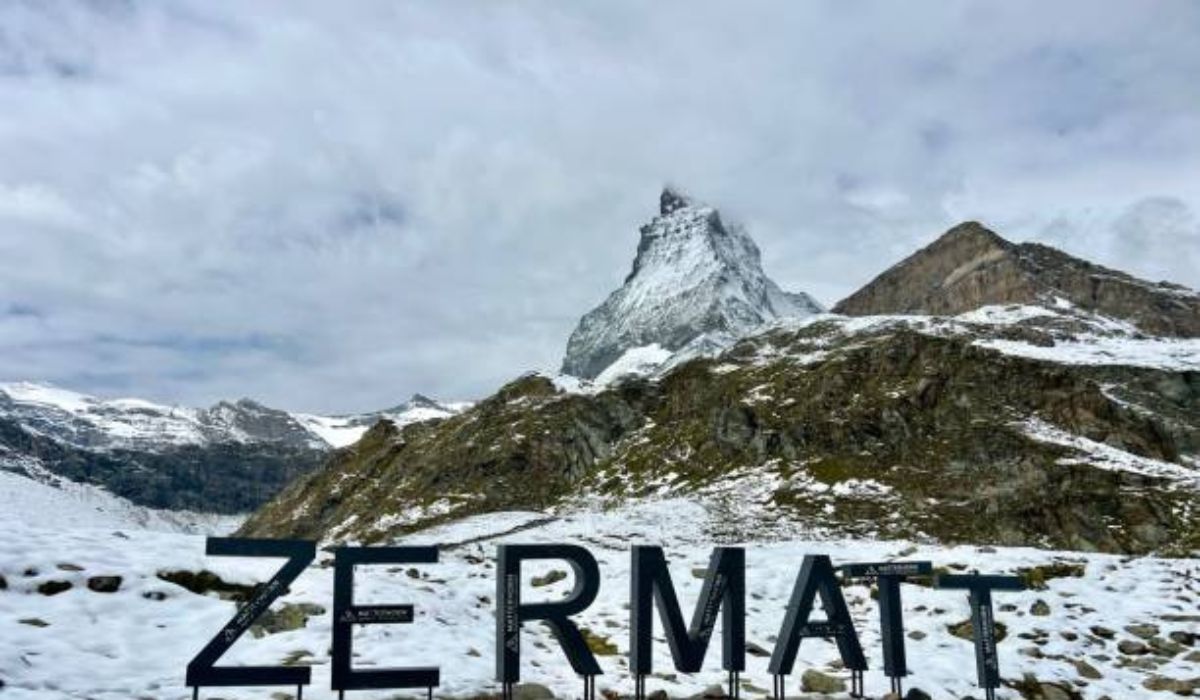
Imagine crisp alpine air filling your lungs as your boots crunch over sun-dappled paths, the jagged silhouette of the Matterhorn rising like a sentinel from the mist. In Zermatt, hiking isn’t just a walk, it’s a portal to raw adventure, where every step echoes the footsteps of 19th-century explorers who first dared these heights. Your journey through Zermatt hiking begins here, blending timeless trails with the thrill of discovery.
Why the Alps Call to Adventurers
Zermatt’s mountaineering legacy pulses through its trails, turning every hike into a dialogue with the past. Back in the 1860s, this car-free village in Switzerland’s Valais region became the epicenter of alpinism’s golden age. British explorer Edward Whymper, a driven illustrator turned climber, fixated on the Matterhorn after sketching it in 1860. His rivalry with Italian guide Jean-Antoine Carrel sparked a race to the summit, culminating in Whymper’s triumphant yet tragic ascent on July 14, 1865. Four of his seven team members perished on the descent, a sobering event that both horrified and captivated Europe, drawing thrill-seekers to Zermatt and birthing modern mountaineering.
Echoes of Pioneers on the Path
Think of these trails as layered timelines, much like sedimentary rock revealing eras. Whymper’s era saw locals evolve from farmers to guides, founding the Alpine Club in 1857 and inspiring feats like Lucy Walker’s 1871 climb as the first woman atop the Matterhorn. Today, Zermatt honors this with the Matterhorn Museum, where artifacts like Whymper’s rope bring history alive. For hikers, it’s a reminder: these paths test resilience, rewarding those who prepare with views that feel eternal.
Modern Twists on Ancient Allure
Can you hike with a nod to history? Absolutely, turn it into a storytelling quest. Spot edelweiss flowers, symbols of alpine bravery since Roman times, or pause at mountain huts where guides once plotted routes. Mythbuster: No, the Matterhorn wasn’t always a hiker’s playground, early ascents were elite pursuits, but now accessible lifts make epic views democratic.
READ ALSO: TravelTweaks com: Hacking History for Epic Journeys
Charting Your Path: Essential Trails
Zermatt boasts over 400 kilometers of marked trails, rated from easy T1 (gentle paths) to challenging T4 (exposed ridges requiring sure footing). Most are well-signed with yellow markers, but always check conditions via the Zermatt app or tourist office. Focus on these icons, prioritized by skill level and seasonal appeal, for Matterhorn views, glacial wonders, and alpine lakes.
Five Lakes Trail (5-Seenweg): Beginner-Friendly Gem
This 9.8-kilometer loop, rated moderate T2, takes 2.5 to 3 hours with 165 meters ascent. Start at Blauherd (cable car from Sunnegga), weaving past Stellisee, Grindjisee, Grünsee, Moosjisee, and Leisee. Three lakes mirror the Matterhorn on calm days, Stellisee offering the most postcard-perfect reflection. Ideal for summer (July to September), when wildflowers bloom, or winter with snowshoes for a frosty twist. Pro tip: Go early to beat crowds and catch sunrise glints.
Gornergrat Panorama Trail: Intermediate Icon
Clocking 6 kilometers with 300 meters descent, this T2 to T3 trail (2 hours) descends from Gornergrat station (train ride up) to Rotenboden, passing Riffelsee for stellar Matterhorn reflections. Views encompass 29 four-thousanders, including Monte Rosa. Best in summer for blooming meadows or winter for groomed paths. Difficulty ramps up with wind exposure, so layer up.
Matterhorn Glacier Trail: Challenging Alpine Thrill
A 6.5-kilometer point-to-point, T3 rated (3 hours, 200 meters ascent), from Trockener Steg to Schwarzsee. Skirt the Theodul Glacier, spotting crevasses and seracs, with close-up Matterhorn drama. Summer only (June to October), as winter snow buries hazards. For experienced trekkers seeking glacial history, Whymper’s route echoes here.
Edelweiss Trail to Trift Hut: Advanced Adventure
This 8-kilometer out-and-back, T3 to T4 (4 hours, 700 meters ascent), climbs from Zermatt village to the historic Trift Hut. Wild edelweiss fields and gorge views reward the steep sections. Year-round viable, but crampons needed in winter. Links to longer routes like the Höhbalmen for multi-day epics.
Seasonal Shifts: Adapting Your Trek
Summer (July-September) shines for clear skies and open huts, though expect crowds. Winter hiking thrives on 70 kilometers of groomed trails, like the Rotenboden-Riffelberg path, often with snowshoes (rentals from CHF 20). Spring melt (May-June) can close high paths, while autumn (October) brings golden larch and fewer people.
| Trail Name | Difficulty (SAC Scale) | Distance & Time | Elevation Gain | Best Season | Key Highlights |
| Five Lakes Trail | T2 (Moderate) | 9.8 km, 2.5-3 hrs | 165 m | Summer/Winter | Matterhorn reflections in three lakes, family-friendly |
| Gornergrat Panorama | T2-T3 (Moderate-Challenging) | 6 km, 2 hrs | 300 m descent | All seasons | 29 peaks view, Riffelsee mirror |
| Matterhorn Glacier | T3 (Challenging) | 6.5 km, 3 hrs | 200 m | Summer | Glacial close-ups, historical vibes |
| Edelweiss to Trift | T3-T4 (Challenging-Advanced) | 8 km, 4 hrs | 700 m | Year-round | Edelweiss blooms, hut refuge |
Embed a visual seasonal timeline: “Zermatt Through Seasons” showing summer blooms (July peaks), winter snow (December groomed trails), spring thaws (May closures), and autumn hues (October solitude).
Beyond the Guidebooks: Hidden Narratives
Dig deeper than the classics for Zermatt’s untold stories. The Charles Kuonen Suspension Bridge, a 494-meter thrill on the Europaweg (T3, 10 kilometers, 4 hours), sways over abysses, evoking Whymper’s perilous ropes. Or trace the Gorner Gorge, a short T2 walk (1.5 kilometers, 1 hour) through ancient rock formations carved by glaciers, whispering of Ice Age forces.
Personal Anecdote from the Trails
When local guide Elias shared tales of 1865’s tragedy at Schwarzsee, it hit differently, standing where rescuers once gathered. Chills guaranteed. For families, reframe tough sections as “pioneer challenges,” spotting wildlife like chamois to keep kids engaged.
Safety Whispers from the Past
Hiking here demands respect: weather flips fast, so pack essentials (map, water, layers). Apps like SwitzerlandMobility rate real-time conditions. Concerned about altitude? Acclimatize in village first.
Local Secrets: Where to Eat and Sleep Like a Trailblazer
Refuel at mountain huts, havens since Whymper’s day. At Findlerhof (near Findeln hamlet), savor rösti with Matterhorn views (CHF 25), evoking rustic guide meals. For stays, base in Zermatt’s historic core: Hotel Bahnhof offers budget dorms (CHF 50/night) with hiker perks like gear storage. Splurge at Riffelalp Resort (CHF 300+), a 19th-century gem with spa access post-trek.
Lift Access Essentials
Cable cars and trains cut ascents: Sunnegga funicular (CHF 26 return), Gornergrat railway (CHF 126 peak season). Peak Pass (CHF 190 for 3 days) unlocks all, saving on multi-trail days. Prices as of 2026, check zermatt.ch for updates.
| Lift Type | Adult Return Price (CHF) | Best For | Skip-Line Tip |
| Sunnegga Funicular | 26 | Easy access to Five Lakes | Buy online, arrive pre-9 AM |
| Gornergrat Railway | 88-126 | Panorama trails | Group tickets for savings |
| Matterhorn Glacier Ride | 120 | High-altitude starts | Early bird avoids queues |
| Peak Pass (3-day) | 190-200 | Multi-trail explorers | Validate at station |
FAQs
Q: What is the best month for hiking in Zermatt?
A: July to September for warm weather and open trails, though September offers clearer skies and fewer crowds.
Q: Are Zermatt hiking trails well-marked?
A: Yes, with yellow signs and apps for navigation, but high routes may have exposure, so study maps.
Q: Can you hike in Zermatt during the winter?
A: Absolutely, over 70 kilometers of groomed winter paths and snowshoe trails await, like Rotenboden to Riffelberg.
Q: How much do the hiking lifts cost in Zermatt?
A: Basics start at CHF 26 (Sunnegga), up to CHF 126 (Gornergrat), with multi-day passes from CHF 190.
Q: Which trail has the best reflection of the Matterhorn?
A: Riffelsee on the Gornergrat trail or Stellisee on Five Lakes, best at dawn for still waters.
Q: Is Zermatt hiking suitable for beginners?
A: Plenty of T1-T2 options like village loops, but build stamina for icons.
Q: What gear do I need for seasonal hikes?
A: Sturdy boots year-round, crampons for winter, sun protection in summer.
3 Explorer Tasks
Download the Zermatt offline map app for trail alerts.
Whisper “Whymper’s echo” to a local guide for insider hut tips.
Seek the edelweiss at Trift for alpine luck, snapping your own reflection shot.
YOU MAY ALSO LIKE: Magoebaskloof Hiking Trails
 John Arthur