

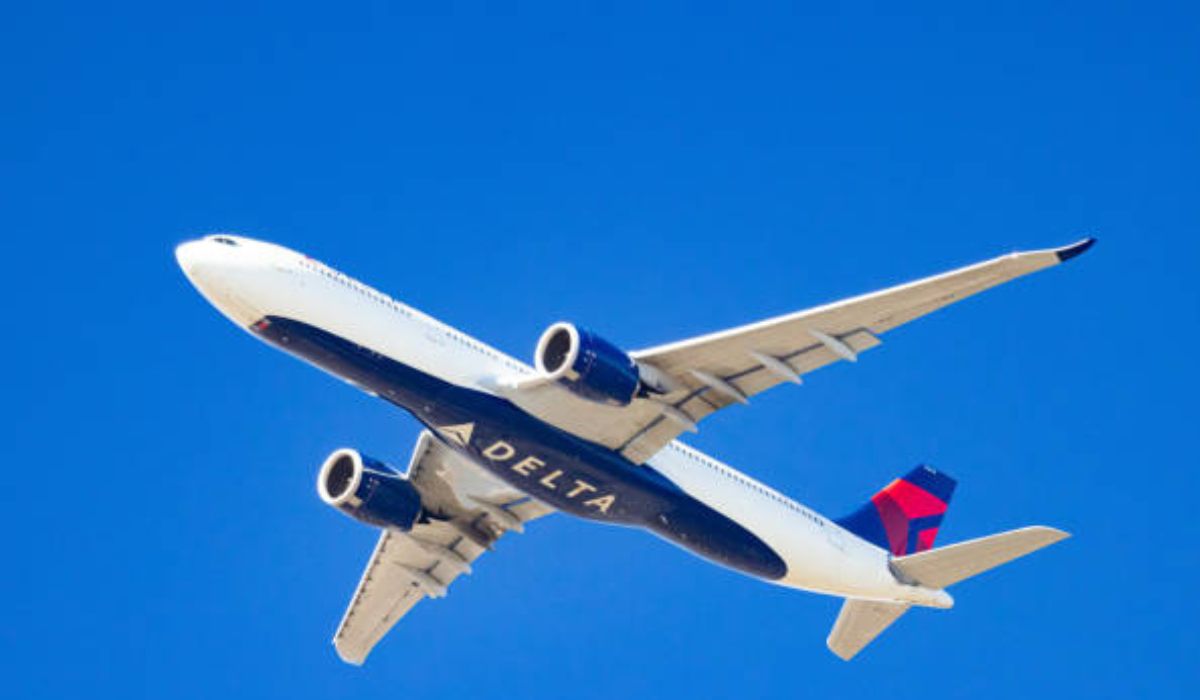
Imagine you’re buckled in at 38,000 feet, the hum of jet engines your constant companion as the vast Pacific stretches endlessly below. Suddenly, a subtle alert in the cockpit shifts the journey from routine to riveting: what if a single system glitch could rewrite your entire travel tale? For passengers on Delta Flight DL275 diverted LAX, this wasn’t fiction, it was their reality on a fateful May night in 2025. Your exploration into this aviation anomaly begins here, where we peel back the layers of a long-haul flight’s unexpected pivot, turning technical jargon into a gripping narrative of safety and strategy.
Why the Diversion Captured Global Attention
Flight diversions, while not everyday occurrences, happen more often than you might think: about 1 in every 10,000 flights globally faces some form of rerouting due to mechanical, medical, or weather issues. But Delta Flight DL275 stood out for its dramatic scope, a transpacific odyssey from Detroit Metropolitan Wayne County Airport (DTW) to Tokyo Haneda (HND) that spanned nearly 6,500 miles before looping back. What made this one buzzworthy? It involved a state-of-the-art Airbus A350-900, registration N508DN, a wide-body marvel designed for efficiency on ultra-long routes.
Picture this: the flight departed Detroit’s Gate A46 at around 1:15 PM local time on May 27, 2025, carrying a full load of passengers eager for cherry blossoms or business deals in Japan. Hours into the cruise phase, over the open ocean, the crew noticed an anomaly in the engine anti-ice system. This isn’t just a minor hiccup, it’s a vital safeguard against ice accumulation that could impair engine performance in cold, moist high-altitude air. The pilots, following rigorous protocols, assessed the risk: continue across the Pacific with a compromised system, or turn back to a secure base? Safety won out, leading to a calculated U-turn.
Aviation experts liken this system to a car’s defroster on steroids: it uses hot air bled from the engine to melt potential ice, ensuring smooth operation. When it faults, it’s like driving in fog without wipers, not immediately catastrophic but unwise to ignore on a 13-hour haul. The decision-making process in the cockpit involves cross-checking instruments, consulting maintenance via satellite, and weighing fuel loads, all while keeping passengers informed without sparking panic. In this case, the crew’s poise turned a potential crisis into a textbook example of precautionary action.
Mapping the Flight Path: From Takeoff to Touchdown
To truly grasp the diversion, let’s chart the journey like explorers mapping uncharted skies. DL275 followed a standard great-circle route northwest from Detroit, skirting Canadian airspace before arcing over Alaska and into the Pacific. About halfway, roughly 5-6 hours in, the issue emerged, prompting the turnaround.
Visualize the path on tools like Flightradar24 playback: the aircraft’s track shows a graceful loop, burning fuel to lighten for landing while heading east-southeast toward California. Why not a closer spot like Honolulu? Fuel dumping might be needed for emergency landings, but here, the crew opted for controlled burn-off, circling if necessary, to reach LAX without environmental impact. LAX’s Runway 06R welcomed the plane at 1:38 AM on May 28, after 12 hours and 15 minutes aloft, a testament to the A350’s endurance.
For aviation enthusiasts tracking via apps, semantic keywords like “FlightAware tracking data” or “flight radar 24 playback” unlock detailed replays, showing speed drops from 500 knots to approach velocities around 150 knots. Air traffic control communications, often archived on sites like LiveATC, reveal calm exchanges: “Delta 275, cleared for diversion to LAX, expect vectors for ILS approach.” This mapping not only demystifies the event but equips you to analyze future anomalies.
Beyond the Headlines: Hidden Layers of Aviation Safety
Dive deeper, and you’ll uncover the unsung heroes: emergency landing protocols that dictate everything from fuel management to passenger briefings. For wide-body aircraft like the A350, maintenance considerations loom large. LAX, as Delta’s West Coast hub, boasts hangars equipped for engine overhauls, unlike smaller airports.
Think of transpacific flight safety as a multilayered shield: redundant systems ensure one failure doesn’t cascade, while crew training simulates scenarios like this quarterly. The diversion spotlighted Boeing 767 mechanical issues in similar past cases, but here, Airbus’s design shone with its fly-by-wire controls aiding the safe return. Passenger experiences varied: some felt the tension in hushed cabins, others appreciated complimentary snacks and updates. One X post captured the mood: “Crew handled it like pros, turned a scare into a story.”
Cockpit crew decision-making blends data and instinct: captains consult checklists, but human judgment seals the call. In this incident, no fuel dumping occurred, avoiding ecological concerns, a nod to modern eco-friendly practices. For frequent flyers, this reveals why airlines favor hubs: quicker turnaround means less disruption overall.
Local Insights: Navigating LAX Like a Pro During Diversions
LAX isn’t just an airport, it’s a bustling ecosystem for handling anomalies. As Delta’s operational hub, it processes thousands daily, with dedicated teams for diverted flights. If you’re caught in one, head to Terminal 2 or 3 for Delta’s rebooking desks, often with priority lines for international reroutes.
For eats and rests, skip the crowds: grab a quick bite at Lemonade in the Tom Bradley International Terminal, or unwind at nearby hotels like the Hyatt Regency, where Delta often vouchers rooms. Pro tip: use the LAX app for real-time gate updates and shuttle info. Accessibility shines here too: wheelchair services are prompt, and quiet zones help families with kids turn waits into games, like spotting plane types from observation decks.
Mythbuster: No, diversions don’t always mean compensation battles. For mechanical issues, EU261-like rules (even for US carriers on international legs) may apply, offering up to $700 in refunds. And while LAX gets flak for traffic, its emergency procedures for international flights are top-tier, with customs fast-tracks for diverted passengers.
| Diversion Airport Comparison | Distance from Turnaround Point (Approx.) | Maintenance Capabilities | Passenger Handling Capacity | Best For |
| LAX (Los Angeles) | 2,500 miles | Full Airbus/Boeing support | High (Delta hub) | Wide-body repairs, rebooking |
| HNL (Honolulu) | 1,000 miles | Limited for A350 | Medium | Quick fuel stops |
| ANC (Anchorage) | 1,500 miles | Basic international | Low | Cold-weather expertise |
| SFO (San Francisco) | 2,200 miles | Moderate | High | Alternate West Coast hub |
Embed a visual timeline: “DL275 Through the Skies,” charting takeoff at 1:15 PM DTW, issue detection at ~6 hours, U-turn, fuel burn-off, and landing at 1:38 AM LAX, layered with safety checkpoints.
FAQs
Q: What caused the Delta Flight DL275 diversion to LAX?
A: A malfunction in the engine anti-ice system prompted the precautionary return for safety checks.
Q: Why was LAX chosen over closer airports?
A: As a Delta hub, it offers superior maintenance and support for the Airbus A350, plus efficient passenger re-accommodations.
Q: Were passengers compensated?
A: Yes, Delta provided hotels, meals, and rebookings; mechanical issues often qualify for refunds under airline policies.
Q: Can I track similar flights in real-time?
A: Absolutely, use Flightradar24 or FlightAware for playbacks and alerts on diversions.
Q: Is this common for transpacific flights?
A: Rare but prepared for: about 0.01% of long-haul flights divert, thanks to robust safety nets.
Q: What should I pack for potential diversions?
A: Essentials like chargers, snacks, and meds; apps for tracking help stay ahead.
Q: How does this affect future Delta operations?
A: It reinforces training; the plane returned to service after inspections, with no broader fleet impacts noted.
3 Aviation Explorer Tasks:
Download the Flightradar24 app for offline tracking maps.
Whisper “anti-ice alert” to a gate agent for insider tips on safety features.
Spot the A350 tail at LAX’s spotting lots for good travel luck.
Ready to decode flight paths and sip coffee with fellow sky watchers? Delta Flight DL275 diverted LAX reminds us that every journey holds hidden stories. Share your aviation tales below.
YOU MAY ALSO LIKE: 10 Trip Planning Websites to Organize Your Next Adventure
 John Arthur